
Harmony in
Neurodiversity
THE BLOG
Welcome to Harmony in Neurodiversity, a blog dedicated to exploring the profound impact of music and positive parenting strategies on the lives of neurodivergent individuals. Join Samantha, a board-certified Neurologic Music Therapy fellow and a passionate Positive Discipline Parent Educator, as she shares her expertise in leveraging the power of music and effective parenting approaches to support and empower neurodiverse communities.
In her blog posts, Samantha delves into the intricate connections between music and the brain. She explores how specific musical elements and interventions can enhance cognitive functions, regulate emotions, improve communication, and promote social interaction among neurodivergent individuals. Through insightful articles and case studies, she demonstrates how rhythm, melody, and lyrics can serve as powerful tools for therapeutic interventions, fostering growth and self-expression.
Positive Discipline Parenting Strategies:
Drawing from her expertise as a Positive Discipline Parent Educator, Samantha sheds light on nurturing positive relationships between parents and neurodivergent children. Her blog offers practical advice, evidence-based strategies, and real-life anecdotes that empower parents and caregivers to cultivate respectful, encouraging, and effective parenting techniques. From setting clear boundaries to fostering a supportive environment, Samantha guides readers in navigating the challenges and joys of parenting neurodiverse children.
Exploring Intersectionality:
Samantha doesn't limit her discussions to singular approaches. Instead, she delves into the intersectionality of Neurologic Music Therapy and Positive Discipline Parenting, illustrating how these methodologies complement each other. Through her insightful content, she showcases how the harmonious integration of music-based interventions and positive parenting strategies can create holistic support systems for neurodivergent individuals, promoting their well-being and personal growth.
Community Engagement and Resources:
Additionally, Samantha fosters a vibrant online community where readers can engage, share experiences, and seek advice. She curates a wealth of resources, including recommended readings, workshops, and practical tools, empowering her audience to implement valuable insights into their lives effectively.
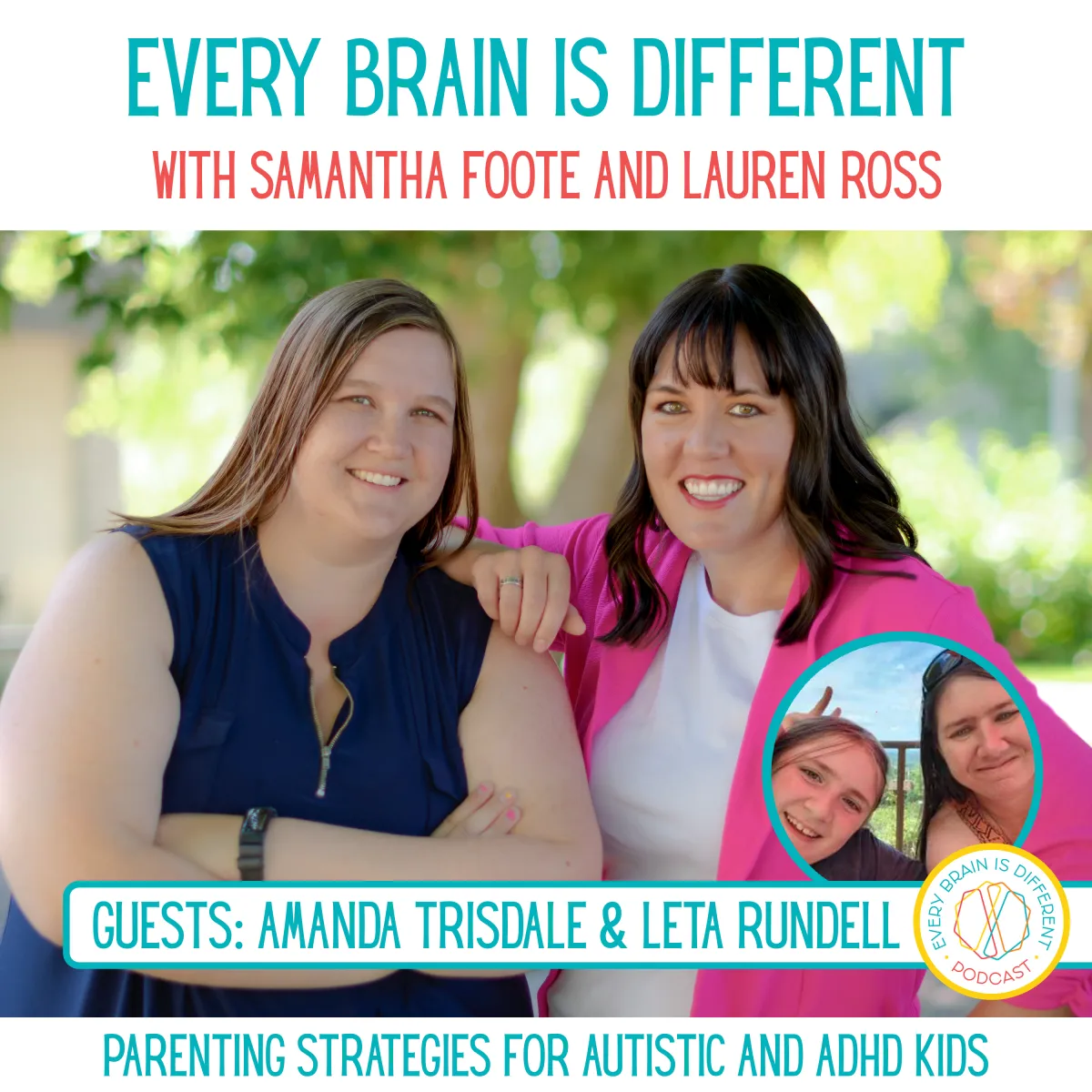
116- Amanda Trisdale & Leta Rundell with Creating Space for Autistic Dancers
Connect with Samantha Foote!
Instagram:https://www.instagram.com/everybrainisdifferent
YouTube:https://www.youtube.com/@everybrainisdifferent
Welcome to Every Brain is Different, the podcast where we celebrate the unique world of neurodiversity. We are your hosts, Samantha Foote, a neurodivergent, Board Certified Music Therapist and mom to three kids of ADHD and autism. And Lauren Ross, an ally to the neurodivergent community with over 10 years of experience supporting children and adults with autism.
This podcast is for parents like you. Navigating the world of neurodiversity with love and compassion. Together we'll create a world where every brain is valued and celebrated. We're excited to embark on this enlightening journey with you.
Transcript:
Samantha Foote: [00:00:00] Welcome to the Every Brain is Different Podcast. We are here with Amanda Trisdale and her daughter, Lida Rundell, and Amanda is the CEO of the nonprofit dance studio Lida founded called Autistic Wings Dance Company, and Amanda is also the co-host of her daughter's podcast, Lida Tap Styles, where they discuss their nonprofit, [00:01:00] Lida's budding dance career, and they throw in a little humor just for fun. And I have been on their podcast. It's an awesome podcast, so everyone should go listen.
Welcome to the show, Amanda and Lida.
Amanda Trisdale: Thanks for having us. She's trying to get her pity on the couch right now. That's all the commotion you're seeing on her camera.
Samantha Foote: Oh, okay. No worries.
So can you tell us a little bit more about yourselves, about how you're involved in the neurodivergent community?
Amanda Trisdale: So, she's driving me- the ADHD does not do well when she's in the corner of my eye going crazy.
So both Lida and I are autistic. She has suspected ADHD on top of it. I have diagnosed ADHD. We, she has been in dance for a long time. She works with some of the best choreographers in LA and New York. She's on Chloe Arnold's International Tap Youth Company, Soul Talk. Chloe is an Emmy-nominated choreographer.
The problem we [00:02:00] had was traditional dance studios just weren't cutting it for her. She was feeling bullied by the adults who just do not understand the neurodiverse world.
Samantha Foote: Yeah, for sure. I can understand that. Like, when my son was in baseball, in a neurotypical team, his coach did not understand that he had PDA and would just shut down when he was yelled at. And so his coach would be like, "You need to go do this," and my son wouldn't immediately do it, and then the coach would just start yelling at him, which would make him shut down, and bad things ensued.
Amanda Trisdale: We would have things like li- like typical autistic people, Lida does not like looking people in the eye, and her teachers would come out and go, "She wasn't listening to me. She wasn't looking me in the eye." And I'm like, the eyes are not necessarily connected to the ears. You and I had that discussion months ago about if we're looking you in the eye, we're not necessarily listening to you.
Samantha Foote: Yeah. In fact, I've heard a lot of neurodivergent people say, [00:03:00] "If I'm looking in your eye, that means I'm not listening to you, I'm just trying to appear like I'm listening to you." And so that's an important thing for everyone to know, that just because you make eye contact does not mean you're listening.
Amanda Trisdale: Oh, no. And she also, teachers would come out and go, "I was trying to correct her stim," 'cause her most common stim is a complicated three-point tap move, and they want to correct it so it's perfect. And I'm like, "I don't think you understand what a subconscious stimming is."
Samantha Foote: Yeah, yeah. And a lot of times when people are stimming, it's so that they can self-regulate, and people are like, "Oh, don't do that stim." And I'm like, "No, do that so you don't have a meltdown."
Amanda Trisdale: But she was getting to the point with all of this, 'cause she was getting… It was not like the crazy accommodations that we were asking for. She got to the point, going to the d- dance studio was causing panic attacks.
Samantha Foote: Oh, no.
Amanda Trisdale: And she would c- go in already [00:04:00] in a panic attack. She would come out crying, and it was like, we can't keep doing this. There's gotta be a better way. And so the dan- we looked at the autistic programs in town. The dance teachers who are doing them have a great heart, but they know nothing about autism. And if you're going to do a program for autistic kids, you gotta know autism backwards, forwards, and six ways to Sunday. And, like, those programs have 20-plus students in a class.
Samantha Foote: Oh, wow.
Amanda Trisdale: I cannot imagine having 20-plus three-year-olds in a class of neurotypical. Now add neurodivergent on there and I'm running for the hills.
So we worked with a bunch of therapists we knew, we worked with neurologists we knew, we worked with developmental pediatricians we knew, we worked with behavioral psychiatrists we knew. We brought everyone to the table and went, "How do we take what they're teaching in the dance world, teach it to autistic kids without it being..." The adaptive dance doesn't work for her [00:05:00] because she wants to have an actual career, and adaptive dance tends to be, "Oh, you're just never gonna learn to dance, so this is all about having fun." And so we took all the science stuff and brought it in t- with all the dance stuff and created a backbone of a curriculum for our dancers. And I say backbone 'cause we're working on a dance IEP for each one of our dancers, and so that curriculum gets shifted to what that dancer needs.
Samantha Foote: That's amazing.
Amanda Trisdale: But we're d- making our level three ASD kids learn first, second, third, fourth, and they're learning it.
Samantha Foote: Yeah. That's awesome. So can you tell us a little bit more about the dance IEP? What do you mean by that?
Amanda Trisdale: So I know everyone has a love-hate relationship with the IEP. I do a lot of advocacy with IEP, so I too have a love-hate relationship with them. We took what I considered the best part of the [00:06:00] IEPs, especially where we were asking parents to go get their therapist to give me diagnoses and tell me what their kids have, 'cause there's gonna be a different way you approach a child who has, like, an autoprocessory disorder along with their ASD. There's gonna be a different way you approach a child who has different types of speech disorders. And we have been working on training our teachers what all these mean, and that way we can focus on how to teach the kids the way they need to be taught. And it seemingly is working great so far this year, but it's year one. We are having a few stumbles where parents are like, "Yeah, they just have a speech disorder," and I'm like, "You're gonna have to kind of clarify what speech disorder means. That kind of runs the gamut.”
Samantha Foote: Yeah. Do they have trouble s- actually speaking, or do they have trouble with receptive skills? Or can they say things but it doesn't make sense? What's going on there?
Amanda Trisdale: Yeah, and I'm like, "I need a little bit more." [00:07:00] But the therapy world has been- Thankfully, all the therapists have come on board with it going, "Oh, you need actual diagnoses? Here's what the diagnoses is." And I'm like, "Thanks, now I can work with this."
Samantha Foote: Yeah. Yeah. And then what do you look for when you're hiring teachers for the dance studio?
Amanda Trisdale: Patience. Lots and lots of patience. The other thing we've been looking for, and I'm going to tiptoe around some of it, 'cause I'm not sure what you, where, how far you wanna go into some of the politics going on today, but do you agree with certain people and what they said about autism?
Samantha Foote: No, I don't.
Amanda Trisdale: And if the answer is, "No, I don't," you're hired. If your answer is "Yes, I actually do agree with them," you're not getting hired.
Samantha Foote: Yeah, yeah. That makes sense, because it's definitely a mindset that especially when you're working with [00:08:00] people with autism, you have to have the right mindset of they are capable, they can do things. They need the right support, but they're capable, and they just, help them be as independent as possible, help them be like, Lita is an amazing dancer, where I think some people might just honestly write her off because of the way she presents, which is ridiculous.
Amanda Trisdale: She actually had teachers write her off because of the way she presents, and they're like, "You will..." While she was working with the- How you present with your autism. She's like, "Presents what?" She had teachers who wouldn't work with her and put her to the corners. Corners are now her safe space in dance studios, where they shouldn't be, because the teachers are like, "Well, you're never gonna learn." She had one teacher come out to me and go, "Well, she has autism, so she's only got, what, a age three mind?"
Samantha Foote: Oh, no.
Amanda Trisdale: She was 11. It was not [00:09:00] age three.
Samantha Foote: Yeah. Yeah. What, how did you navigate that? Like, how did you navigate talking to teachers who just wrote her off?
Amanda Trisdale: S- so for a little bit, I was trying to be nice to them and work with them, and then she would... She can mask for about 18 months in a dance studio, and then she's done with the teachers, because she starts hating the teachers, the way they're treating her. And I'd try to go talk to them. The problem is there are a lot of parents who watch Dance Moms and thinks that's what dance parents are supposed to be like, so I got labeled as the troubled parent any time I'd go, "You need to accommodate her." So we would go to another studio. I would spend an hour, two hours on the phone going, "This is what she needs. These are the accommodations she needs." Sh- 'cause she's also got severe dyslexia, and it never fails, whatever studio we put her into has reading involved in dance classes.
Samantha Foote: Oh, interesting. I wouldn't have thought about that. [00:10:00]
Amanda Trisdale: Y- yeah, and on top of it, one thing anyone doesn't, dyslexia is an au- processing, vision processing issue. All these dance teachers are like, "Oh, it just means the words are floating on the page." And I'm like, "Hi, have you ever tried to pirouette when y-," 'cause they're all like, "Pick a spot on the wall and pirouette that way." And I'm like, "She's getting dizzy the way you're trying to teach her." And they're like, "Well, she just needs to quit being so lazy."
Samantha Foote: Oh, wow.
Amanda Trisdale: And I'm like... So it would be a lot of fighting for about two seasons, and then we'd go try another studio that assured me that they would do it. We were moving across the country, so it wasn't just in one area of the country, it was in multiple areas since her dad's military. And finally, the whole reason Autistic Wing started is, she was upset at the exact same time I was upset, and we're like, "Okay, let's just start our own studio."
Samantha Foote: Yeah. That's usually what happens when awesome things come about, is that people just get frustrated and they're like, "I've had enough. I'm doing it my own [00:11:00] way."
Amanda Trisdale: Yeah, and it is... I'm currently upset with one of our local therapy groups 'cause they are out of the children's hospital, they won't give me a grant until I have so many donors, but they keep sending me students, and I'm like, "I have outgrown my current space, guys. You gotta..."
Samantha Foote: Yeah. Yeah, 'cause I'm sure that if someone has a neurodivergent kid, they'll come to you before they go to a typical dance studio just because you understand what's going on.
Amanda Trisdale: Yeah. It took us a few months to convince the local therapy groups that we knew what was going on, especially... This sounds weird, but in 2023, someone dropped a paper comparing autism to Parkinson's di- disease, and I think most of us in the US just ignored it 'cause it came out of China. A lot of the dance guys somehow got a hold of this and clamped onto it, so they're treating the autistic kids like Parkinson's patients. The local therapy [00:12:00] groups were like, "Oh, well, the dance world is stupid." I, I kinda see where the correlation came there, right? And so they had blacklisted all the studios in town. Like, when parents would come going, "Is there anywhere my autistic kid can get dance?" All the s- therapy groups in town were like, "There's nowhere"
Samantha Foote: Oh, weird
Amanda Trisdale: And we took a few months with us going, "No, we promise we're doing this, we're doing that." And they're like, "Oh, okay. Yeah." And now they're telling all the parents, which means I have way too many kids wanting to come in.
Samantha Foote: Yeah. Yeah. So you definitely need a bigger space. And like we were talking about before, that you have to have certain things in the space to make it appropriate for autistic kids because, like, lights, we were talking about certain lights have sounds. And if they have the fluorescent lights, if they have that sound, it's gonna drive everyone crazy.
Amanda Trisdale: [00:13:00] I, I will be the first one it drives crazy. With two of our students specifically, I am currently, because we're in a place I can't put elopement lo- alarms, I am sitting at the front door while they're in class. The moment we move, we're getting elopement alarms. That's something most dance studios aren't thinking, "Oh, I need elopement alarms on my door," 'cause they're not thinking… I had one dance teacher go, "Well, what are these kids doing eloping? They're too young to get married."
Samantha Foote: Oh, no.
Amanda Trisdale: And that was, I was talking to one of our therapy groups in town who was filling us out, and I'm like, "Yeah, we don't have elopement alarms. We're working... Like, I am literally sitting at the door so they can't get in the parking lot.”
And they're like, "Oh, you know what elopement is.”
Samantha Foote: Yeah. I don’t- Yeah, I never think about that,
Lauren Ross: I-
Samantha Foote: people... would think
Lauren Ross: Cannot tell you how many times I've had to explain to staff the definition of elopement outside of, like, marriage in Vegas. It hurts my soul a little bit. [00:14:00]
Leta Rundell: It is
Amanda Trisdale: It is such a common- I don't know that you connected to the audio, Leta
Leta Rundell: Are you sure I didn't connected to the audio?
Samantha Foote: You're connected. I can hear
Amanda Trisdale: You're connected.
Leta Rundell: Oh, yay. I'm pretty sure these kids are too young to understand what marriage are. Oh. So I'm pretty sure the level three kid that we have doesn't know what marriage is because, A, he's a child, and B, he's a child, and C, th- th- I, I, I don- I don't think any child thinks, "Oh, hey, marriage. Let's do that right now." Well ...
Amanda Trisdale: I mean, those are the things you have to think about when you're working with autistic and neurodivergent kids.
Samantha Foote: Yeah, and I, we say that, oh, we can't believe that people don't know what elopement means, but if you're not in this world, that's why we have our guide for parenting neurodivergent kids, and we have all those terms on there. Because when you come into the neurodivergent world, [00:15:00] there's so many terms that you don't know about. What is occupational therapy? What does elopement even mean? What does neurodivergent mean? And so yeah, that's why I created that guide because people ... Like, I saw in autism groups that parents would say, "I have no idea what you're even talking about."
And so anyway, if people want that, they can go to our website. But that's why I created it.
Amanda Trisdale: Like I told you earlier, I'm not the parent to talk to about that, 'cause I grew up with all those terms.
Samantha Foote: Yeah.
Amanda Trisdale: And I'm like, "This is just how we speak." There's been a few th- new things thrown in, but most of this is how my therapist sp- spoke to me as a child
Samantha Foote: Yeah, and if you grew up in it, it's definitely different than if you're a neurotypical parent and then all of a sudden your kid has autism. You're like, "I don't know what these words mean." So yeah, that's important to realize.
Amanda Trisdale: But yeah, that, it did take us a while to convince the therapy groups, but being able to [00:16:00] go, "Yeah, I know what the term elopement is. I know what occupational therapy is and why you use occupational therapy," which having been in the community all of my 43 years, that should just be something, and I forget sometimes the outside world doesn't know that stuff.
Samantha Foote: Yeah, yeah. I think that's why it's so overwhelming for parents when they get an autism diagnosis because people are like, "Oh, you should do this therapy. You should be- do this therapy. You should do this therapy." And they're like, "What is that therapy even for?" Like, we were talking about earlier about speech therapy, and most people think, oh, if you can't talk or you don't talk very well, you go to speech therapy, but they can do so many other things like social skills, receptive skills, all that kind of stuff.
Amanda Trisdale: I- th- they do way, way more, and I've had to talk to a few parents, 'cause they're like, "My child can pronounce letters." And I'm like, "Yes." And they're like, "But I don't understand why they're in speech therapy." They don't [00:17:00] understand grammar. We send them to the SLP. That's where the language part of that comes from.
Samantha Foote: Yeah, yeah. So what do you say to parents who maybe they see their kid in the dance studio, and they want to kind of manage their behavior because they don't think their kid is doing the appropriate behavior? What do you do in that situation?
Amanda Trisdale: 13-year-old, remember you're on someone else's podcast. Be nice.
Leta Rundell: What? Oh. Then never, never mind. Never mind
Amanda Trisdale: The 13-year-old has some, teenager opinions.
Samantha Foote: Yeah.
Amanda Trisdale: Yeah. But a lot of times-
Leta Rundell: Or we could just drag them. We could just drag them and tape their mouth shut, and then tie them to a chair, see how they feel.
Samantha Foote: Oh, no.
Leta Rundell: Tell them, tie, tie them to a chair and leave them in the waiting room alone for hours. See how [00:18:00] they feel.
Amanda Trisdale: Calm down. I should explain that real quick. A lot of our school systems around here still use old-fashioned ABA.
Samantha Foote: Oh, no.
Amanda Trisdale: And these parents are being taught old-fashioned ABA. Like, if the child's not listening, sometimes in order to manage them, we do need to restrain them. They're not calling it tie them down, but restrain them. And so when they get in the studio, we have an- no masking, ignore- not ignore the stimming, but you can't stop someone from stimming, so I'm not going to punish your child for stimming. I, thankfully, am not teaching, so I can pull the parent to the side and go, "Look, no one is judging you here. No one is judging your child here. It is perfectly fine if they're stimming. Stimming is important for them. I don't, I know what the school systems are telling you. I've worked with the school systems. Let's not listen to the school systems." The teachers need to be the one teaching the class- Notice [00:19:00] they're not getting upset with whatever autistic thing your child is doing because it's natural, it's normal. And one of our teachers, I'm not allowed to say her- how old she is because you never say a lady's age, but she does have great-grandchildren.
Leta Rundell: I don't get it. That's literally the most stupid of stupid rules of stupidness ever. It's stupid- It should be burned. It is stupid.
Amanda Trisdale: She doesn't understand why you don't, but-
Leta Rundell: It's stupid
Amanda Trisdale: when the parents won't listen to me, a lot of times she has to get involved, and she's like, "Look, if you're coming in and you're trying to tell your child what to do when it's something that they naturally do, you're going to make it where they don't like dance, and you're going to make dance not a safe space, and we want this to be a space where they can express themselves," especially when we're talking the younger kids.
Samantha Foote: Yes. I love that. So let them do what they need to do and still participate, 'cause I don't [00:20:00] think a lot of stimming, like, it's not stopping kids from participating. It's helping them participate more 'cause they can self-regulate instead of just having a meltdown.
Amanda Trisdale: And I think a lot of our parents, they're coming from the neurotypical community. They don't understand what stimming is.
Samantha Foote: Yeah.
Amanda Trisdale: No one has sat down and explained to them, this is releasing dopamine. This is releasing this. This is helping them regulate. And they're like, "Wait. No one ever told me that."
Samantha Foote: Yeah. Yeah. So yeah, it's important to share those kind of things because they might be getting other information from, like, the school. Like you said, "Oh, stimming is bad. We have to stop it," when really stimming has a purpose and it needs to be done. And unless they're, like, hurting someone, then don't worry about it.
Amanda Trisdale: None of our classes right now have above two kids in it, so it's not like you're really distracting anyone.
Samantha Foote: Yeah, yeah. That's awesome. [00:21:00]
Amanda Trisdale: Which is the other thing we did, was we made sure these classes are small, which some of our classes, especially with our level three kids, and I love... Well, and even our level three adults, 'cause we have level three ASD adults taking classes 'cause autism doesn't stop at 18, contrary to what some people believe.
Samantha Foote: Yep.
Amanda Trisdale: We, with level three, rarely put more than one dancer in the class. They just usually tend to need more one-on-one support, especially at beginning dance. And for our level twos, we're never gonna have more than two in the class, mainly 'cause our teachers are like, "I cannot handle more than two children in a class."
Samantha Foote: Yeah, yeah.
Amanda Trisdale: And the kids Lita's age, we go up to four kids in our ki- level one classes at times, but that's an oddity.
Samantha Foote: Well, that's awesome that you can provide that one-on-one support or really small group support. [00:22:00]
Amanda Trisdale: That's what the nonprofit status was for.
Samantha Foote: Yeah, for sure, 'cause yeah, I can understand that you'd have to be a nonprofit to be able to do that.
Amanda Trisdale: Yeah. But you can't really ... You, as a neurodiverse person, some of these dance classes in the traditional studios are getting to 25, 30, 40 kids per class. You're just getting lost at that s- amount of kids.
Samantha Foote: Yeah, for sure. And then if you need any accommodations, it's harder to provide those accommodations.
Amanda Trisdale: Yeah. I think a lot of the studios don't ... I've had a couple discussions with few, a few of them who are like, "Well, we don't have to provide ADA accommodations." And I'm like, "See, but the moment you said you could is the moment you do."
Samantha Foote: Yeah. Yeah, for sure.
Well, thank you for coming on the podcast today. We just have a few more questions before we wrap up. Where can people find you online?
Amanda Trisdale: They can find the studio [00:23:00] online at www.autisticwingsdancecompany.org, and it's Autistic Wings Dance Company on Facebook and Instagram, and just Autistic Wings on TikTok.
The podcast is Lita's Tap Styles. You get to hear a 13-year-old be 13. She's definitely becoming more and more a teenager the further we're getting into podcasting.
Samantha Foote: I love hearing her thoughts, though, when I, like, when I've been on your podcast, I love hearing what she's thinking about and just everything that she says.
Amanda Trisdale: Well, and s- sometimes we do get a little emotional, 'cause on Tuesdays we do a lot of dance stuff. And, like, we just did one on her imposter syndrome and what teachers said.
Samantha Foote: Oh, yeah.
Amanda Trisdale: And so you get to hear a teenager-
Leta Rundell: I don't have imposter syndrome. Imposter syndrome. Stop saying I have- I don’t have imposter syndrome. I don’t have imposter syndrome.
Amanda Trisdale: Can I finish this?
Leta Rundell: Mom.
Amanda Trisdale: She says, “I don't have imposter syndrome, but I think [00:24:00] I can't dance.”
Samantha Foote: Oh, okay.
Amanda Trisdale: So that's- Yeah ... the very definition there. Is that not? Yeah.
But she's @LetaTapStyles on Instagram and TikTok.
I never do my own social media, 'cause I'm running the website or the socials for the studio and for her.
Samantha Foote: Nice. Well, that's a lot to run, so I can understand that.
Our last question is what do you do for fun?
Amanda Trisdale: What do you do for fun, kiddo? She's, I don't know. Oh, she is m- just got into resin and making, like, resin key chains and everything.
Samantha Foote: Cool.
Amanda Trisdale: And because she's making so many, I may have said that the first 2,000 people to donate at least $10 a month to the studio get a key chain, because she is making enough that I need to get them out of the house.
Samantha Foote: That's awesome. I love it.
Amanda Trisdale: You can show a key [00:25:00] chain on cam- you cannot throw it at the camera. The camera's expensive. You can show it, though, if you want to.
Samantha Foote: Yeah, you can show us.
Amanda Trisdale: Um, but... Yeah, you can show it. I mean, they're all different. And now she's trying to throw it.
Samantha Foote: Oh, no. Yeah.
Amanda Trisdale: But, yeah, that's a lot of art stuff around the house, sewing, going out. We're in Colorado, so getting out and hiking and getting out where nobody is so I don't have to get peopled out.
Samantha Foote: Yeah, understandable. I love it.
Well, thank you so much to both of you for coming on the show today. We really appreciate your time, and people should definitely check out your studio, donate to it so more people can get dance lessons, and you can get into a bigger studio without fluorescent lighting.
Amanda Trisdale: Yes. That is a big one. We are looking for one without fluorescent lighting.
Samantha Foote: Yeah, yeah.
Amanda Trisdale: I don't know why people don't understand those are bad.
Samantha Foote: Yeah. I don't know. But, I don't know. Well, thank you.
Amanda Trisdale: Yeah. Thank you so much for having us on, Samantha and [00:26:00] Lauren.
Samantha Foote: Yeah.
Hey, everyone, Samantha here, and I'm thrilled to invite you to join me for something special, the Parenting Power Hour. This is your chance, parents of neurodivergent kids, to bring your questions directly to me and fellow parents in the room. We're here to help you develop actionable plans that really work so you can finally stop the meltdowns and find peace in your home. As a mom to three kids with ADHD and autism, I've seen and been through the challenges, too, so trust me, we'll find solutions together that fit your family. Don't miss out on the Parenting Power Hour. It's a free online monthly gathering every second Thursday of the month from 12:45 to 1:45 Mountain Standard Time. Visit EveryBrainIsDifferent.com to reserve your spot today.
Samantha Foote: Hey, Lauren. What were the highlights? I just love those two. I've talked to them a few times. I've been on their podcast a couple of times, and we never get to music therapy, [00:27:00] which is what we're supposed to talk about. And so I'm gonna go back on a third time.
Lauren Ross: And hopefully get to talk.
Samantha Foote: And this time we're going to talk about music therapy. But anyway, okay.
Lauren Ross: They seem great. I, I love what they're doing.
I, I think they bring up a, a thing of a gap in of- Between adaptive things and more towards, not necessarily like professional, but, I don't wanna say like legit, but just like more intense. There is, there is a gap. There are people who want more than just it being inclusive and having fun, like they really want to, to learn and, and gain those skills and, and things like that. And I feel like they're filling that void in a way, and so I think that's really, really great, so I definitely encourage people to go support them.
And then I think I really love and appreciate the, the person-centeredness of it all, like the [00:28:00] really, the, the one-on-one, the dance IEP, like really what is it that they have, because then this can really help us tailor to, to fit their needs and stuff like that. And so I love that that's how they're doing it.
And then a just, a reminder of the ignorance of some people with some of the struggles that they've had and the interactions, and I just, I, I can't imagine the frustrations that they've been through with, with, with different things and studios and things like that. And so I, I'm glad that they got frustrated enough that they've created this space. And so I, I'm super excited for them about it.
Samantha Foote: Yeah, 'cause Leta, I don't know if they said this, but she started dance when she was seven years old, and by age nine she was in dance classes with people that were like older than her. They were all [00:29:00] teenagers, and she had such a high skill level that she was in their classes.
Lauren Ross: Mm-hmm.
Samantha Foote: And so I just think that's amazing. But if she would've been in adaptive classes, you're right, there's a gap between actually learning the skills and just having fun. And so I think it's good that they have adaptive classes just to have fun.
Lauren Ross: Oh, absolutely, absolutely.
Samantha Foote: But there's also a need t- for people who are very serious about- Mm-hmm ... the sport, the dance, the whatever, to be able to learn those skills in an adaptive environment still.
Lauren Ross: Yeah. And it, and they shouldn't be prevented from doing that just because of a, a label or a diagnosis. And-
Samantha Foote: Yeah
Lauren Ross: Again, when, when you can help someone and focus on their strengths and have that one-on-one and have that flexibility and having that adaptability, like, sky's the limit for, for some of these kids and adults. And so, [00:30:00] yeah, I, I really love that they're creating that space, and that they recognize that, that need. And it brings light to the need kind of between the, the two. So I love it.
Samantha Foote: Yep. Yep. I think they are fantastic people, and what they're doing is amazing. And yeah.
Well, thank you all for listening this week. If you want that ultimate guide to parenting your neurodivergent child, if you're new to the neurodivergent world and you don't understand what anyone is talking about, or you don't understand what resources are available, or you don't understand what the resources even mean, go to everybrainisdifferent.com and you can get that free resource. And thank you all for listening.
Thank you for listening to today's episode. We hope this discussion on neurodiversity has provided you with support, understanding and inspiration. If you're looking for more support, Or you can go to everybrainisdifferent.com and download the ultimate guide to parenting your neurodivergent child.