
Harmony in
Neurodiversity
THE BLOG
Welcome to Harmony in Neurodiversity, a blog dedicated to exploring the profound impact of music and positive parenting strategies on the lives of neurodivergent individuals. Join Samantha, a board-certified Neurologic Music Therapy fellow and a passionate Positive Discipline Parent Educator, as she shares her expertise in leveraging the power of music and effective parenting approaches to support and empower neurodiverse communities.
In her blog posts, Samantha delves into the intricate connections between music and the brain. She explores how specific musical elements and interventions can enhance cognitive functions, regulate emotions, improve communication, and promote social interaction among neurodivergent individuals. Through insightful articles and case studies, she demonstrates how rhythm, melody, and lyrics can serve as powerful tools for therapeutic interventions, fostering growth and self-expression.
Positive Discipline Parenting Strategies:
Drawing from her expertise as a Positive Discipline Parent Educator, Samantha sheds light on nurturing positive relationships between parents and neurodivergent children. Her blog offers practical advice, evidence-based strategies, and real-life anecdotes that empower parents and caregivers to cultivate respectful, encouraging, and effective parenting techniques. From setting clear boundaries to fostering a supportive environment, Samantha guides readers in navigating the challenges and joys of parenting neurodiverse children.
Exploring Intersectionality:
Samantha doesn't limit her discussions to singular approaches. Instead, she delves into the intersectionality of Neurologic Music Therapy and Positive Discipline Parenting, illustrating how these methodologies complement each other. Through her insightful content, she showcases how the harmonious integration of music-based interventions and positive parenting strategies can create holistic support systems for neurodivergent individuals, promoting their well-being and personal growth.
Community Engagement and Resources:
Additionally, Samantha fosters a vibrant online community where readers can engage, share experiences, and seek advice. She curates a wealth of resources, including recommended readings, workshops, and practical tools, empowering her audience to implement valuable insights into their lives effectively.
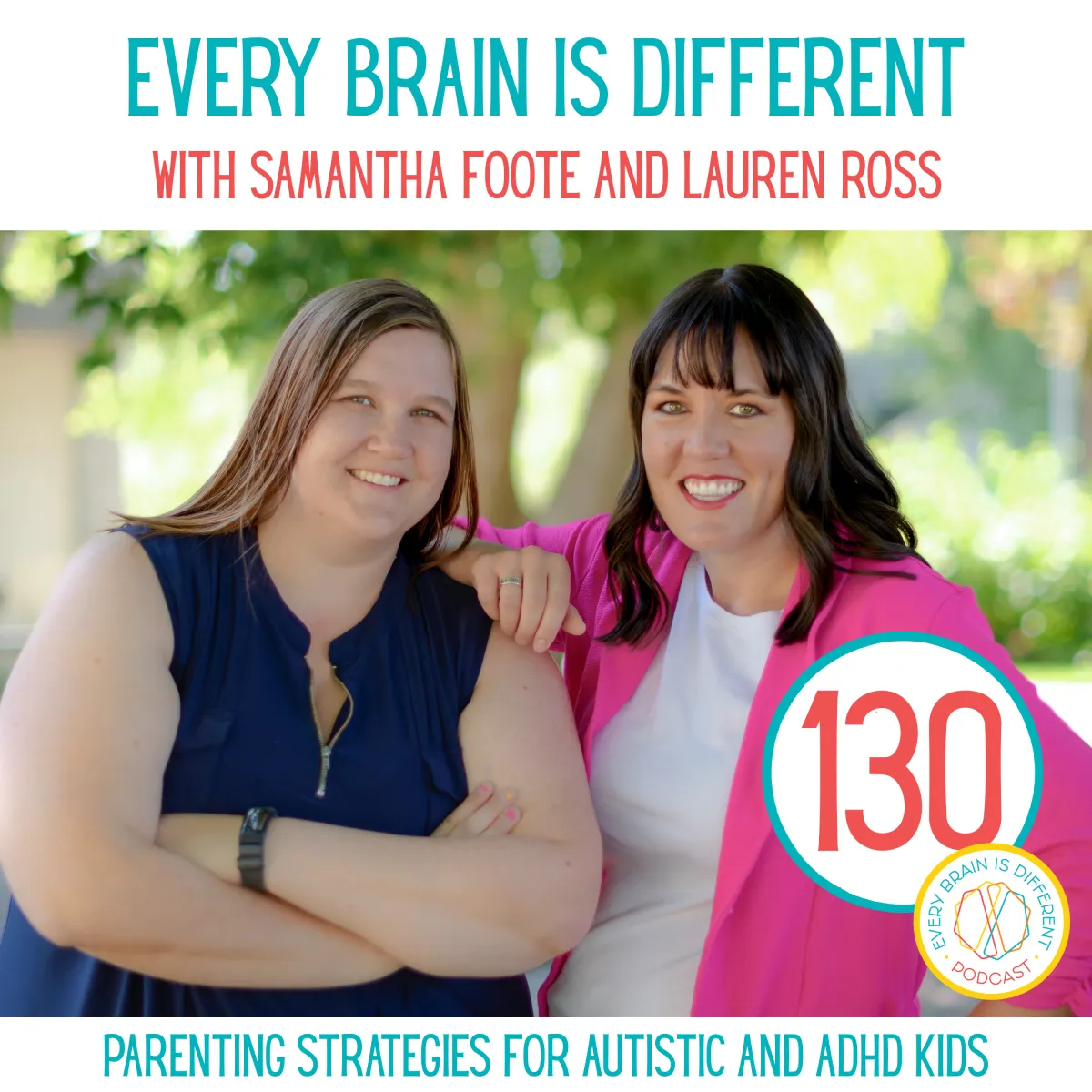
130- Mealtime Struggles and ARFID in Neurodivergent Kids
Connect with Samantha Foote!
Instagram:https://www.instagram.com/everybrainisdifferent
YouTube:https://www.youtube.com/@everybrainisdifferent
Welcome to Every Brain is Different, the podcast where we celebrate the unique world of neurodiversity. We are your hosts, Samantha Foote, a neurodivergent, Board Certified Music Therapist and mom to three kids of ADHD and autism. And Lauren Ross, an ally to the neurodivergent community with over 10 years of experience supporting children and adults with autism.
This podcast is for parents like you. Navigating the world of neurodiversity with love and compassion. Together we'll create a world where every brain is valued and celebrated. We're excited to embark on this enlightening journey with you.
Transcript:
Samantha Foote: [00:00:00] Welcome to the Every Brain is Different podcast. It is Samantha and Lauren here with you, and last week we talked about feeding therapy and how mealtimes can be so hard for kids that are neurodivergent have autism, ADHD, all of that. And we talked a little bit about ARFID, but we are going to go more in depth with that today. So [00:01:00] ARFID stands for avoidant restrictive food intake disorder, and-
Lauren Ross: That's a lot
Samantha Foote: Yeah, it's a lot. It's not about being a picky eater or being stubborn. Like, it's a recognized eating disorder. So when people, they say, "Well, if your kid wanted to eat, they would." Not true. I have followed, I, I think it's myarfidlife. She is a girl, like a young girl who she just shows her trying new foods, and she really wants to eat foods, but it's the anxiety that she just can't. And so she's trying new foods, and she's gotten really good at trying them and just showing, "Yeah, I like that, I don't like that," but just showing what life is like with ARFID. And so I really like that Instagram account, so-
Lauren Ross: I think I've seen some of [00:02:00] those videos and-
Samantha Foote: Yeah, I just like the education of it. Like, she's trying to reduce the stigma around picky eating, in quotes, if you're not watching this. So yeah, ARFID means a child avoids or restricts food to the point where it causes nutritional growth or emotional problems. And unlike other eating disorders, ARFID is not about body image or weight. Kids with ARFID usually aren't worried about looking fat. Instead, it's about fear, discomfort, or sensory overload. So I've heard a lot of kids with autism, they don't like eating fruit and vegetables. They like eating the processed foods because processed foods taste the same-
Lauren Ross: Mm-hmm
Samantha Foote: every time.
Lauren Ross: They're consistent.
Samantha Foote: Yeah, it's very consistent. Where if, I don't know if you eat blueberries, but-
Lauren Ross: I don’t.
Samantha Foote: ... blueberries, like, it is a mixed bag what you're gonna get.
Lauren Ross: That's probably why I don't eat them.
Samantha Foote: Yeah.
Lauren Ross: Like, I don't. I'm really picky with strawberries too because of, like, I want them [00:03:00] sweet, and if they're not sweet or more tart or not ripe like, I don't want it.
Samantha Foote: You never know what you're gonna get. And so that's why a lot of kids and adults don't eat a lot of fruits and vegetables, because you never know what it's going to taste like, especially fruits. I feel like vegetables are pretty consistent…
Lauren Ross: On flavor. I feel like it's more like a texture thing.
Samantha Foote: Oh, yeah. For texture, for sure. So yeah, so that is why a lot of people with autism do not eat things that grow. They eat things that are processed because if you eat a potato chip, sour cream and onion, whatever potato chips, it's gonna taste the same every single time. It's gonna be the same texture. It's gonna be the same flavor every single time.
But if your kid has ARFID, some signs that you might notice are very limited lists of safe foods, refusing entire groups of food, [00:04:00] like never eating fruits or vegetables or meat, because meat can be a mixed bag, too. Sometimes you get meat that's not the same as other things that you've eaten. It might taste a little different. And then another thing you might notice is anxiety or gagging when they are presented with new foods, and then growth concerns, fatigue, or needing supplements. And I know that needing supplements is super common in a lot of kids with autism because of this. I know my kids have had to take supplements, but then they don't wanna eat the supplements because they don't like the flavor of the supplements, and it's just- Oh my gosh. They're like-
Lauren Ross: Cycle parties.
Samantha Foote: Yeah, yeah. They're like, "Your son is malnourished." And I was like, "It is not for lack of trying, okay?" They're like, "Well, you need to hide," they're like, "You need to hide these, like, protein powders or vitamin powders or whatever in smoothies." I'm like, "You think he'll drink a smoothie?" Okay. yours would be like that. That's great for you. [00:05:00] And, so it can be really hard.
But like we said last week, if your kid does have very limited food, things that they will eat, then you can do feeding therapy. You can do, just work with them, keep going.
Here are some common myths about ARFID. They'll grow out of it- not necessarily. They're just picky- this is beyond picky, it's not just picky eating. And then it's bad parenting- so, nope, that's not true either. It's not bad parenting, it has nothing to do with your parenting. So, if ARFID is not about picky eating, if it's not just being a kid, if it's not bad parenting, why does ARFID happen? And it could be because of sensory sensitivities. So like we said before, kids find certain textures unbearable. They don't like mushy fruit. There might be slimy vegetables. They might not like how it smells, how it tastes, and even the look [00:06:00] of food can trigger them just to be like, "Nope."
I know with my kids, they don't have ARFID, but if foods are combined, they will not eat them. And so, like when we have spaghetti, they have their noodles, they have their meat, they have their vegetables, all on their plate, but definitely not touching. And forget about the spaghetti sauce, because that is not happening. But, so they just don't like, they just don't like things combined. They don't like that texture in their mouth.
Lauren Ross: It’s good flavor-
Samantha Foote: Yeah, yeah.
Lauren Ross: But it's texture.
Samantha Foote: It's texture. My son is yelling at me saying that he likes beef with spaghetti. Uh.
Lauren Ross: Italian sausage is the only way to go.
Samantha Foote: Oh.
Lauren Ross: My hot take.
Samantha Foote: That's your hot take for the day?
Lauren Ross: I, I hate spaghetti with ground beef.
Samantha Foote: Oh that's funny.
Lauren Ross: Italian sausage all the way. I will live [00:07:00] by that. Everyone else is, "What's wrong with you?"
Samantha Foote: I like it both ways, so.
But yeah, but it could be sensory sensitivities. It could be negative experience. So a child who once choked or vomited or gagged can have a deep fear with that food. If, like I choked on a cucumber once because it was in a circular, it was cut, it was just cut. But it wasn't cut in half, and it was just in a circle, and it got stuck in my throat. I did not eat cucumbers for a long time because, or every time I eat them now, I have to cut them in smaller chunks so that I don't, so that I don't choke on it.
Lauren Ross: Panic and choke.
Samantha Foote: Yeah. So that's a, that's a real thing.
Lauren Ross: I had that with, uh, garlic bread. I had the flu once one Thanksgiving when I was little, and the last thing I remember eating was like a whole bunch of garlic bread and then vomit all over. I didn't eat garlic bread for years.
Samantha Foote: Oh, yeah. Yeah.
Lauren Ross: Years. And it's like one of my favorite foods, like now, but half my childhood, [00:08:00] get it away from me.
Samantha Foote: Yeah. I got sick after I had a 3 Musketeers and a Hostess cupcake. I, that was 30 years ago, and I have never ate them ever again. So yeah, that's a real thing. If you think about yourself, like, why would you expect your kids to eat that food if they've gotten sick off of it? If they got sick after they ate something, like it's a real thing.
Lauren Ross: Yeah. Even if it wasn't correlated, like.
Samantha Foote: Yeah, yeah.
Lauren Ross: But, but still, they experience that negative experience. And that's what they associate that with, so.
Samantha Foote: Yeah, for sure. Like, I ate pizza, like the Cowboy Pizza from Papa Murphy's, like when I was younger, and I also wore a pair of pants that were getting a little tight on me. I- got the flu after that. I did not eat that pizza for 25 years [00:09:00] because I blamed it get- that getting me sick, and then I also never wore those pants again because they choked me and made me sick. So we should probably stop talking about food that made us sick, but it's a thing. So if your kid is refusing to eat certain things because of those things that happened, just give them grace because I still have yet to eat a 3 Musketeers. I can't even look at 3 Musketeers without being like, "Ugh," 'cause it was so traumatic to me.
Lauren Ross: Yeah.
Samantha Foote: Yeah.
Hey, everyone. Samantha here, and I'm thrilled to invite you to join me for something special, the Parenting Power Hour. This is your chance, parents of neurodivergent kids, to bring your questions directly to me and fellow parents in the room. We're here to help you develop actionable plans that really work so you can finally stop the meltdowns and find peace in your home. As a mom to three kids with ADHD and autism, I've seen and been through the challenges too. So [00:10:00] trust me, we'll find solutions together that fit your family. Don't miss out on the Parenting Power Hour. It's a free online monthly gathering every second Thursday of the month from 12:45 to 1:45 Mountain Standard Time. Visit everybrainisdifferent.com to reserve your spot today.
And then interoception challenges. So interoception means the process of sensing and perceiving internal bodily signals. So hunger cues, different things like pain, all those different things like your internal body cues. Some kids don't feel hunger cues and don't- or don't notice a difference between feeling full or feeling hungry. And so if they're not feeling hungry, they're obviously not gonna eat, or if you give them food and you make them eat it and they're not hungry, then they'll be uncomfortable. And so, yeah, so that's a thing.
And then anxiety, worrying about trying something [00:11:00] new can become paralyzing, like we've talked about before. So kids with pathological demand avoidance, in the fight or flight, when they get too much anxiety, they just shut down or they fight. Same thing with this food. If you're looking at this food and you have so much anxiety about eating it, you're not gonna eat it, 'cause it's just, it's too much. It's over, it's over-stimulating.
But yeah, so those are some things that you can look for or reasons why they happen, like why ARFID happens. It's sensory sensitivities, having negative experiences with that food, interoception challenges, and anxiety. So those are some of the reasons.
And just remember that ARFID is a legitimate disorder. It's not something your child is choosing. I'm going to just keep repeating this throughout the episode. If you get nothing else from this episode, just know that ARFID is a legitimate eating disorder. [00:12:00] Your kids are not faking it. It is real and needs to be addressed.
And it shows up so often in kids with autism or ADHD because their brains process sensory information differently. So it's just, it's all about the senses. Like- They might perceive things differently. They might, the smell might be enhanced, the taste might be enhanced. You never know what, what's going on. You can obviously ask them, or you can do a little investigating to see what's going on. But that's why it happens so much in kids with autism and ADHD because of how their brains process information.
So some things that ARFID can affect the family with, it might mean that parents are making different meals for different kids because their kid will not eat what they make. In my house, I don't make [00:13:00] different dinners, but I do give them the option of getting their own food after they try what we've had. But if your kid has ARFID, it might be too overwhelming to have them try a new food every single day. So think about that, like your situation. I know I don't want you to have to like make a bunch of different meals, but just think about where your child is. You know your child the best. Is it too overwhelming for them to even touch the food or try a new food? Or do you need to scale it back a little bit and just make sure that they're eating? So don't be afraid to make them something different. I know the traditional parenting says, "You eat what I... You get what you get, and you don't throw a fit." Well, this is a legitimate eating disorder, so we might wanna rethink that a little bit. But just do what you can.
Because I understand that if you have a kid with ARFID, it might be constant negotiations. It might, you [00:14:00] might have a lot of stress around dinner tables. You might not be able to go out to eat because the menu doesn't have what your kid needs or wants. And so that can be really stressful. It takes an emotional toll. Parents feel like failures. They feel guilty when their child won't eat healthy foods. They might get judgment from others. And you can just tell other people just “Go away and mind your own business.” Yeah, just, just simmer down.
Lauren Ross: Are you my kids doctor now?
Samantha Foote: Yeah.
Lauren Ross: Go away.
Samantha Foote: Just say, "I have it handled. We're working on it." I understand, though, that can be very difficult. I've talked about that a lot on here, other people's, their opinions on how you should parent.
Lauren Ross: Unwanted opinions.
Samantha Foote: Yeah, unwanted opinions. Just remember that you're your child's advocate, you know what's best for your kid, and don't let other people's opinions get in, get in the way of doing what's best for your kid.
It is hard, though, I understand, with sibling dynamics, too, [00:15:00] because if one kid isn't eating something, then the other kid'll be like, "Well, why do I have to eat this?" And it's hard for them to understand, well, this kid has ARFID, and it's a legitimate eating disorder, and blah, blah, blah, blah, blah, blah, blah, blah. Like, the, the other sibling doesn't care. They just know that their brother or sister is getting what they wanna eat, and they have to eat the dinner that you made. So resentment can build up, stress can build up, and you just have to kinda navigate through that.
We can have a different episode about that, how to navigate sibling dynamics, because that goes into everything. If you have different expectations for one kid than the other kid, so if one kid has to do more chores than the other kid, or they have to do different chores, or they have to read for 20 minutes while their brother or sister has to read for 30 minutes because that's what they can do. I always tell my kids, like, "You guys are different.[00:16:00] This is why you have different expectations, because I know you can do this. I know that your brother is working up to that, but he's not quite there. And then these are like how you differ in other ways.” But yeah, we should have an episode about how to deal with sibling dynamics. And then-
Lauren Ross: Definitely a thing.
Samantha Foote: Yeah. Yeah. And that's like in typical families too, like, you just have different, you kind of have the same expectations for your kids, but different expectations at the same time. Like, you're working up to the same expectations, but you have to meet your kid where they're at.
Lauren Ross: Yeah. And then different paths-
Samantha Foote: Yeah
Lauren Ross: is where you're at with that kid.
Samantha Foote: Yeah. Yeah.
Lauren Ross: But- Like, the end game's the same, but the road there will be different.
Samantha Foote: Yeah. And that's okay. And my kids have actually done a pretty good job of understanding that. For example, I say, my son, my oldest son has to go read by himself for 30 minutes, and then he's like, "Well, why doesn't my little sister [00:17:00] have to do that?" "Well, because she's a lot younger than you are, and she's going to read with me," but he wants to know why he has to read chapter books when she has to read, as he says, little kid books. I'm like, "Well, because she's a little kid and you're not." And so when I say that, he's, "Oh. Oh yeah, that makes sense." So yeah. But just know, as a parent, it's hard, you're not alone
Lauren Ross: Yeah.
Samantha Foote: If you need help-
Lauren Ross: There goes the big takeaway.
Samantha Foote: Yeah, I think, I think that's the biggest takeaway is you're not alone. We're here to support you. If you have any questions, let us know. Other professional help that you can get is there's feeding therapists, there's occupational therapists, there's speech therapists trained in swallowing and feeding. There's dieticians who understand ARFID and can ensure that nutrition needs are met, and then there's mental health providers who you, your kid can go to counseling to get more [00:18:00] help with the anxiety, like coping skills for anxiety. There's all different kinds of providers to help with that.
And then just remember to model what you want your kid to do. So if you want them to try a bunch of new foods, or you want them to have an expanded, what is it called? If you want them-
Lauren Ross: A food list?
Samantha Foote: Yeah, an expanded food list, just model that. Let them see you eating different things. Let them know that they're safe. Don't force them to try new foods, but just have the foods available if they wanna try them, and then show them that you can eat different foods and, just model what you want.
But as a takeaway, just remember you didn't cause this, and you can't, like, quote unquote, "fix it" overnight. It's not gonna happen overnight. You can have small, consistent steps to build trust and progress, but it's not gonna [00:19:00] happen overnight. You're not gonna all of a sudden have a kid that eats everything you give them. And then progress is not linear. Kids may go backwards before moving forwards again, and that's okay. Professional help is valuable, and just remember you don't have to do this alone. Like, we are here to support you. There's all the other professionals to support you, and if you need help locating those professionals, let us know. We can give you resources and just let you know where you can find those professionals.
And then if mealtimes are super stressful and you are stressing about your kid eating new foods, just remove the pressure and just let your kid eat for a while, and just see how the pressure can come down, the stress can come down, and then maybe they will try new foods when they're not pressured to do so.
So, I'm just going to [00:20:00] end with- ARFID is real. It's not picky eating. It's a legitimate eating disorder, so don't be too hard on yourself if your kid has ARFID. I think I've said that at least five times now. But yeah.
Lauren Ross: Preach it.
Samantha Foote: Yeah. Thank you for listening today. If you have any questions about it, just let us know. We'd love to have feedback from you. If you wanna leave us a review, that would be awesome, too. And yeah, we will see you next week.
Thank you for listening to today's episode. We hope this discussion on neurodiversity has provided you with support, understanding and inspiration. If you're looking for more support, Or you can go to everybrainisdifferent.com and download the ultimate guide to parenting your neurodivergent child.