Harmony in
Neurodiversity
THE BLOG
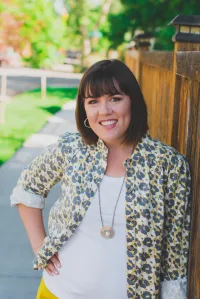
Welcome to Harmony in Neurodiversity, a blog dedicated to exploring the profound impact of music and positive parenting strategies on the lives of neurodivergent individuals. Join Samantha, a board-certified Neurologic Music Therapy fellow and a passionate Positive Discipline Parent Educator, as she shares her expertise in leveraging the power of music and effective parenting approaches to support and empower neurodiverse communities.
In her blog posts, Samantha delves into the intricate connections between music and the brain. She explores how specific musical elements and interventions can enhance cognitive functions, regulate emotions, improve communication, and promote social interaction among neurodivergent individuals. Through insightful articles and case studies, she demonstrates how rhythm, melody, and lyrics can serve as powerful tools for therapeutic interventions, fostering growth and self-expression.
Positive Discipline Parenting Strategies:
Drawing from her expertise as a Positive Discipline Parent Educator, Samantha sheds light on nurturing positive relationships between parents and neurodivergent children. Her blog offers practical advice, evidence-based strategies, and real-life anecdotes that empower parents and caregivers to cultivate respectful, encouraging, and effective parenting techniques. From setting clear boundaries to fostering a supportive environment, Samantha guides readers in navigating the challenges and joys of parenting neurodiverse children.
Exploring Intersectionality:
Samantha doesn't limit her discussions to singular approaches. Instead, she delves into the intersectionality of Neurologic Music Therapy and Positive Discipline Parenting, illustrating how these methodologies complement each other. Through her insightful content, she showcases how the harmonious integration of music-based interventions and positive parenting strategies can create holistic support systems for neurodivergent individuals, promoting their well-being and personal growth.
Community Engagement and Resources:
Additionally, Samantha fosters a vibrant online community where readers can engage, share experiences, and seek advice. She curates a wealth of resources, including recommended readings, workshops, and practical tools, empowering her audience to implement valuable insights into their lives effectively.

110- Phrases That Build Partnerships for Your Neurodivergent Child with Tucker Miller
Connect with Samantha Foote!
Instagram:https://www.instagram.com/everybrainisdifferent
YouTube:https://www.youtube.com/@everybrainisdifferent
Welcome to Every Brain is Different, the podcast where we celebrate the unique world of neurodiversity. We are your hosts, Samantha Foote, a neurodivergent, Board Certified Music Therapist and mom to three kids of ADHD and autism. And Lauren Ross, an ally to the neurodivergent community with over 10 years of experience supporting children and adults with autism.
This podcast is for parents like you. Navigating the world of neurodiversity with love and compassion. Together we'll create a world where every brain is valued and celebrated. We're excited to embark on this enlightening journey with you.
Transcript:
Samantha Foote: [00:00:00] Welcome to the Every Brain is Different Podcast. We are here with Tucker Miller, and Tucker is the CEO of Onward Leadership, is an executive coach, speaker, and author with over 35 years of experience in law, human resources, and corporate leadership. Known for her book, The First Four Words, Tucker helps leaders transform conversations to drive connection and impact. You can learn [00:01:00] more about her at onwardleadership.com and jtuckermiller.com.
Welcome to the show. We're so excited to have you.
Tucker Miller: Thank you very much. And I bet people are wondering, why are you bringing a leadership person into this conversation? But we'll get into that.
Samantha Foote: Yeah, for sure.
Tucker Miller: I think that’ll be interesting.
Samantha Foote: Yeah. Yeah. Can you tell us a little bit about how you're involved in the neurodivergent community?
Tucker Miller: I have a lot of colleagues. Actually, it's surprising how many, you probably know this, how many adults discover this or learn, usually as they're supporting their kids, and then, oh, by the way, and I think that'll be a familiar piece. So that definitely is a part of many of my colleagues' experience. And I have a growing number of kids around me that, and neighbors who are asking for help as they're navigating the school district. So while I don't directly have neurodivergent, I have [00:02:00] raised high-risk, high-anxiety, high-needs kids. And I think increasingly that seems to be more the norm than not these days.
Samantha Foote: Yeah. It's definitely, diagnoses are increasing, and I think there is a lot of debate about that. I think it's just we're getting better at diagnosing, and so people have always been around. Like, I was talking to somebody the other day and he's, like, in his 70s and he said, "Back in my day, nobody was autistic and nobody had ADHD." And I'm like, "Not true."
Tucker Miller: Yeah.
Samantha Foote: I can guarantee you that's not true.
Lauren Ross: We just didn't talk about it as much. Like with all the access, people can share their experience and be like, "Oh my gosh, I'm the same way."
Tucker Miller: That's right.
Lauren Ross: You know, if, if that person has a diagnosis, it's maybe I have that, and they look into it more so.
Tucker Miller: Even if there had been more diagnoses back in the day, there weren't as many helping professionals and solutions and [00:03:00] research, so we would've had yet another label with nowhere to go with it. So I can understand it, but that's the beauty of where we're at right now. Certainly there's plenty of things that make people anxious, and all of that is another layer to it. But the insights that we're all benefiting from- Um, through this research and work and discussion I think is really powerful.
I think- my background is in law, and I remember when the Americans with Disabilities Act was passed, and people thought, "Oh, that's the thing to help people with disabilities, people in wheelchairs." But as a young mother with a stroller or a toddler or whatever it was, I was like, "Ramps, they're amazing. Elevators, thank you." And you start to notice that when we learn how to help one group, we usually all end up benefiting, and that was why I was so excited to talk with your audience today.
Samantha Foote: Yeah, and I… We were [00:04:00] talking to Bryson Tarbet, who is the music teacher? Is that what he is? Anyway, he was talking about inclusion in the classroom, and how in his classroom, when he was a teacher, he just laid out all the accommodations, like, not the accommodations, but the sensory equipment that you could use, like headphones or fidget toys or anything like that. He just had them on a back table in his classroom, and anyone could go get it. And so it took away the stigma of, oh, you have ADHD so you need a fidget toy. Or you have autism and you need it quieter in the classroom, so you need the headphones. Like, the majority of the kids that you don't- use those things were neurodivergent, but it took away the stigma of they're ONLY for people who are neurodivergent.
Tucker Miller: And there's also all kinds of different learning styles and, and just ways that we take in information. I've been doing workplace training for many years, as you indicated in the [00:05:00] intro, and there was a point in time where if people requested it, we could show videos with closed captioning. If they requested it, we would do it. And so there was this call-out, "Does anyone need an accommodation? And then we'll do that." And I just, I remember having this tense conversation where I said, "We stopped doing that because the stigma makes it even hard to ask for what you want." And the interesting thing was I started to notice, even in our own home and with my kids who have great hearing, we started to prefer closed captioning all the time anyway. In fact, as soon as I discovered that, I wanted to go back and watch Downton Abbey all over again because I'd missed so much the first time.
Samantha Foote: Yeah. Yeah. I use closed captioning all the time, and I am not deaf. I have- ... fine hearing. So-
Tucker Miller: Yes ...
Samantha Foote: it's fine.
Tucker Miller: It's powerful.
Samantha Foote: Yeah. But that's what we're here to talk about with [00:06:00] you today, is having those tense conversations, maybe conversations that you don't feel comfortable having, or just the hard conversations and how we can advocate for our kids a little bit better.
You have the book, The First Four Words.
Tucker Miller: I do. Yes.
Samantha Foote: And can you just tell us a little bit like- Oh, I love it.
Tucker Miller: It's right there. It’s always right there.
Samantha Foote: Yeah. Yeah. What are your recommendations for parents who might have to have a hard conversation that they don't wanna have?
Tucker Miller: Well, let's just acknowledge every parent is gonna have a hard conversation, either with their co-parent, either with their parents about how to raise their kids, how to advocate for their kids, and the hard conversations that we have with our kids. And it's not unlike anyone. We're gonna have ... It's part of the human experience. Half of them go easy, half of them don't feel all that comfortable. And if- they may or may not be all that hard, but if they're uncomfortable and we start to worry about it, enough that we start to talk ourselves out [00:07:00] of even trying, why even try? Why have the conversation? And that's the thing that I want to emphasize is the first conversation to have, lots of times, is with yourself. Am I shying away from this conversation, why? Am I already prescribing what I think the outcome can only be only one solution? Or am I already anticipating how the other person's gonna react, and I'm using that to justify why I do or don't say something?
So I think that's a really, the first pause is to check in and find, am I uncomfortable? Why am I uncomfortable? And is it really true? Because the first and best step beyond that in having an effective next conversation with a person is to be very much neutral in your emotional response. Because as soon as you come in hot, there's immediate deflection, [00:08:00] defensiveness, and people are then going to listen to your behavior or your tone and not hear what you're trying to say.
So first step of advocacy is check yourself, and then neutralize tone. And then the question becomes, how can I find the win-win? So I wrote the book, The First Four Words, because I have found even with very senior-level executives, they were shying away from conversations that were not nearly as personal and nearly as emotionally difficult as the ones that you're having when you're advocating with a child. And having high-risk teens, trust me, spent a lot of time in the counselor's office, the principal's office, the whole thing. So- Even executives kept coming back to me saying, "I didn't have the conversation." And we'd agreed that it would be helpful to have. We agreed. We talked about what it would be, what the outcome would be if they had it. [00:09:00] And I said, "Why didn't you have the conversation?" And they would tell me, "I didn't know what to say." And I think when you think about a hard conversation around advocating for your child, I know what my emotional response is, and I know what I'm outraged about. I know what I wanna try and get out of it, but do I really know what to say?
And I find that oftentimes the fear of not knowing what to say or saying it badly or things might getting worse, increasingly, even for my clients, was becoming the reason why the conversations weren't happening. And when conversations that need to happen don't happen, the situation festers. And when it's your child, the stakes get higher and higher.
And I know I'm preaching to the choir. I know that you've been there. Lauren, your face says it all. How do we step into those conversations more confidently earlier before we have that escalation or the defensiveness that might come up [00:10:00] from the other side? And I think one of the first things to realize, this goes back to my experience as a trial attorney, each side has their win or the thing that they need to conserve and m- maintain. And so you think about the school district or teachers, in theory, they're looking for equality. So when you come in asking for an exception, that already challenges how do we ensure that everyone's having equal access. That's one of the things. How do we ensure that we're using our budget effectively? That's another piece. And so just understanding the pressures that the person on the other side might be having and being open and curious to them, looking for ways to not only get your result, but to help them with theirs, or at least present that you're open to that is a good way to do it. So that's process stuff, being curious, looking for ways to acknowledge their challenges and [00:11:00] their goals, being collaborative as much as you can and staying neutral.
And then conceptually, that all sounds fine, but what do I say? And lots of ways to start. So one of the things I'll ask my clients is, "If you could start that conversation in as few as four words, how would you start it?" And that really became the genesis of the book because I found when I asked that question, the conversation that they were afraid to have or that they said they didn't know what to say, they could flip into a gamification thing and say, "If I could start that in four words-" Let's find the win-win. That's an option. What would it take? What could be possible? And so you start to think about what are a few simple phrases that you tuck into your toolbox, and then you start with that. People will say, "Once I'm started, where does it go from there?" And I said, that's the [00:12:00] beauty of it. Most of the resistance you have is your own resistance to even having the conversation, and once you get it started in a neutral, productive, collaborative way, you're usually gonna be met with the same energy. Will you get the result that you don't want- that you want? Maybe not, and in my experience, not exactly. However I want a partnership with that person because my first time coming to talk with you probably won't be my last time. So how can we maintain the relationship even if we disagree over the outcome, at least for right now?
I think that's really helpful, and back in the days when I was practicing law, they would say if any one party walks away from a mediation or a conversation, one person doing cartwheels and one person crying, that was a bad result. You want both people to still have some agency and [00:13:00] relationship enough to keep moving forward.
Samantha Foote: Yeah.
Tucker Miller: So I, I hope that helps.
Samantha Foote: Yeah. That is great. I love what you said about collaboration and wanting to walk away both, like, getting something out of it, so one person's not, like, super happy and one person's crying. We did an episode about talking to your coach, like a sports coach of your kid, and that might be a difficult conversation, and just saying, just say, "We wanna collaborate with you. We wanna make this a win-win situation. Like, how can we support you?" And just really going into that and leaning into that rather than, "This is what I need. I want you to do this for me." It's like, “how can we support each other for the good of my kid?”
Tucker Miller: Like- That's right. And the good of my kid and all the kids that you wanna help, because I'm assuming you got into this profession because you were really earnest in your desire to help kids.[00:14:00] So I'm not asking anything for my kid that I'd wanna prevent you from providing something as meaningful to other kids. But I can't really speak for those kids. I'm speaking for this one, so let's see if we can figure this out.
Samantha Foote: Yeah. When my son, he didn't get officially diagnosed with pathological demand avoidance because they don't diagnose that in the US, but his occupational therapist said, "I think he has it," and then I looked at everything and, yes, he definitely does. And so I went to the school and I said, "He has pathological demand avoidance," and they're like, "What is that?" They had no idea what it was, and so my hope is that through educating them about what it is, that they might identify other students who could also use the accommodations that my son is getting, and so everybody can just win. They can succeed where they might have seen other kids as, quote-unquote, "problem kids". Like they're [00:15:00] being defiant, they're not doing what they're asked. But now they might have that new understanding of, oh, they're being defiant, so- Maybe they have pathological demand avoidance. Maybe it's anxiety that's driving them. Maybe there's trauma in their background and now they have anxiety, and that's why they're being defiant. It's not that they wanna be defiant, it's just that they have no other option.
Tucker Miller: Absolutely. I resonate very specifically with that. And we had different labels passed around for what we were dealing with our kid, and I think in talking with you and the description that you provided, that's probably more specific, the PDA piece that you're talking about.
Samantha Foote: Hey, everyone, Samantha here, and I'm thrilled to invite you to join me for something special, the Parenting Power Hour. This is your chance, parents of neurodivergent kids, to bring your questions directly to me and fellow parents in the room. We're here to help you develop actionable plans that really work so you can finally stop the meltdowns and find peace in your home. As a mom to [00:16:00] three kids with ADHD and autism, I've seen and been through the challenges, too, so trust me, we'll find solutions together that fit your family. Don't miss out on the Parenting Power Hour. It's a free online monthly gathering every second Thursday of the month from 12:45 to 1:45 Mountain Standard Time. Visit everybrainisdifferent.com to reserve your spot today.
Tucker Miller: So in the midst of it, one of the things that came up after we had engaged in a variety of things in partnership with the school district to the extent we could, but ultimately seeking other, other resources. And I went back and talked to the school counselor who had been passionately supportive of my kid, really passionate about our family. We loved her, and yet she was actively playing a role that was so closely aligned to the school district that in ways that she didn't understand, she was actually [00:17:00] undermining the partnership. And that's an interesting thing, but I felt like I had a responsibility to show, "Can I show you how this system is set up to save money and not really be as helpful to the families and the kids that I know you care about?" And it was an interesting discussion. No shame, no blame, no vilifying, but here's another way to look at the role that you are being asked to play. And I think it was... I- the word that comes to mind, I think she was devastated to discover that following the rules, doing the things that she was asked to do, trying to be a good counselor in the system, had her actively participating in labels that were inaccurate and assignments to be in certain programs that were completely inappropriate. And until we [00:18:00] talked it through, I don't think she had any insight for it.
It took a while before I was ready to have that conversation in that neutral, calm way. But it was really meaningful that she could hear it, that she could hear it. And I hope that it was meaningful for her to understand it because I, at that point, and I'm sure you've been in this position, did have some ideas for how she could be more collaborative in this in-between place that she is between the school district and the families that she wants to support.
Samantha Foote: Yeah. Yeah, and I think most people want to support our kids the way that they need to be supported, and they just don't understand how. So if we can say, "Hey, this works really well at home. Maybe let's try this," or, "This works really well when he goes to occupational therapy or speech therapy or whatever. Like, maybe we can try this at school [00:19:00] because school is not going well, and these other places are, so let's see what we can do." And I think from my experience, when I've communicated that, teachers are more than willing to do what is gonna make their students succeed. They want to see their students succeed. They don't want to have behavioral issues. They don't want to see their students fail. They just don't know what they don't know.
Tucker Miller: And inadvertently, I think it can be really surprising to them to find out they're inadvertently doing certain things are actually making the situation worse.
And my neighbor has a kindergartner who's coming home every day with a red card or a purple card, and just grieving the fact that she's been identified as a bad kid. And I don't even think that's the messaging that the teacher's coming from, but her card's different than other people's, and she knows that's not right. And you say, "There's gotta be a more discreet way to manage [00:20:00] that." And it's just, that's crushing.
I just had something come up yesterday, a memory from fifth grade. I am very well on in years, and I was stunned to tap into that experience. I didn't expect it to come up, and the emotions were still really raw. And so I think about this little five-year-old who's so sweet and struggling, and, you know, what is ... How do we maintain self-esteem in that? That's part of what we're advocating for. And I see that with my son. He's now almost 30, and there is a large portion of his life that- I don't think he's even willing to talk about, it was so difficult. And so advocating through the education part of it is one thing, but also providing that emotional support and wellbeing so that it's [00:21:00] not, it's not stigmatized, as you said-
Samantha Foote: Yeah, yeah.
Tucker Miller: and scarring.
Samantha Foote: Yeah. I was talking to someone today. She r- it's Clarissa. She runs a parent-tween connection company, and she was saying maybe parents need to find their kid, not an advocate, but someone that they can talk to that's like the Boys & Girls Club, like a big brother or something like ... But not through a nonprofit, just finding someone that they can trust, that they can talk to, so when things happen, they don't have to go to mom or dad or their counselor. They just have a normal person to talk to that's not like these other labels. And I think that would be very beneficial if they're getting bullied at school and they don't wanna talk to their parents, or something's happening in their life that they just don't wanna talk to their parents about it, then they can have that person to go to. And I just thought that was a really great idea. But obviously, you have to vet the right [00:22:00] person for that because that is putting a lot of trust into someone. But if it works out, then that might be a good option for a kid who's maybe not talking to their parents as much, doesn't feel comfortable talking to their parents.
But yeah, so we were just talking about that today, and I just thought that's an idea that I never thought of before.
Tucker Miller: Yeah. I like that idea. I- it's ironic, my, my kid who was struggling so much was a playground friend, so he was there for other kids that were getting bullied, but he didn't have his own playground friend. And, and I didn't know that was an issue. I think sometimes things aren't getting talked about because they haven't even figured out yet what the issue was. I remember talking to my son when he was in his teens, and I'd come to learn that he was just off the charts high anxiety. But he always seemed pretty calm until all of a sudden it started exploding.
Samantha Foote: Yeah.
Tucker Miller: And I said, "Matt, I just ... I didn't even, I didn't even know." And he said, "Mom, I didn't know [00:23:00] other people didn't feel this until it became what it became. I thought this was part of everyone's experience." And some of the words we use, like anxious, nervous, we all have some variation of that. And I think as a child, how do they even articulate the need for that kind of connection? Yeah. And as a parent, I wasn't astute enough to pick up on it, and that's a regret. But that's how we learn.
Samantha Foote: Yeah, definitely. Like, parenting is hard. You're never gonna do it the way you wanna do it.
Tucker Miller: No.
Samantha Foote: And there's, there's things that I look back on that I'm like, "Oh, I coulda done that better." But that's why you learn, and that's why you- That's why you learn and grow.
Tucker Miller: Yep.
Samantha Foote: Thank you so much for coming on the show. Do you have any resources? I know you have your book. Do you recommend any other resources to help people have those hard conversations? Or where can people find your book? [00:24:00]
Tucker Miller: They can find my book on Barnes & Noble, independent booksellers, and Amazon. And I think i- I wrote it for people to have a way to get things started. So even though we talked about it being a leadership book, there is a chapter around what four words are never gonna work. Like, it's rare to think that, "Over my dead body," is ever gonna be a good opener. So there's a few things there. Yeah. But there is a part around, how do you support someone who's going through grief or a setback, and what do you say in a family gathering situation? So there are a broader set of scenarios and situations there. I don't have the child advocate chapter of the book, but I am putting a pin in it for future opportunities.
Samantha Foote: Awesome. I love that. And our last question for you is, what do you do for fun?
Tucker Miller: Well, this is not gonna sound very fun [00:25:00] for most of the people. I learned to knit when I was five, but I never really got all that good at it. And then there are a few good things that came out of COVID, and I became an expert knitter. And I love sheep, alpacas, yarn, fiber, wooden needles. Anything in, that I can do with my hands to keep my hands busy and to create with color and fiber is completely fun.
I also like to travel, which is more mainstream, but I thought I'd throw that in there.
Samantha Foote: No, I love it. I- I- Yeah, I love it. That's awesome. Whatever you do that you like to do, that's what we wanna hear about. Says-
Tucker Miller: What do you do for fun?
Samantha Foote: That’s just so different. I go outside and do things. I like going on adventures. I like going... Like, tomorrow we're going to Hells Canyon in Idaho, and I'm s-
Tucker Miller: Wow!
Samantha Foote: ... stoked. Yeah. So I like to go on [00:26:00] adventures and go camping and all that stuff.
Tucker Miller: That sounds cool. What about you, Lauren?
Lauren Ross: I'm all about Legos and naps. Um- I
Tucker Miller: I wanna go on those things. This is great.
Lauren Ross: Big fan of Legos, big fan of photography.
Tucker Miller: Nice.
Lauren Ross: So those are my fun things.
Tucker Miller: That's cool.
Samantha Foote: Yeah.
Lauren Ross: Yeah.
Tucker Miller: Thank you. That was fun.
Samantha Foote: Yeah. Thank you so much for coming on the show.
Lauren Ross: Yeah!
Tucker Miller: Thank you.
Samantha Foote: Lauren, what were the highlights? What'd you think?
Lauren Ross: Ooh, so many. I like going back, 'cause we've talked about this a couple times now, that like an accommodation for one, like we talked about the wheelchair ramps, like that helps parents with strollers and elevators. And so it can, it benefits everyone, and I wish more people would get on that bandwagon. It's not taking away from others, it's adding to everyone most of the time.
Samantha Foote: Yeah.
Lauren Ross: And then I love, and I think this is really important for any conversation for anybody, especially if it's gonna be a hard conversation or [00:27:00] conflicting conversation, is to check yourself and take that pause before you go in, into it. Especially if it is something that you may be like really frustrated with or upset, to have that moment, like she said, to neutralize your emotions. Because I think a, a lot of times, especially if you're trying to get something, especially in like professional avenues, like you really have to neutralize that. And so I really kind of appreciate that advice.
Samantha Foote: Yeah.
Lauren Ross: And then with her, those four words, when she mentioned- four of them that have stuck with me. When we were working together, I went to my very first conference. I forgot what it was called, you may remember. And in one of the talk-
Samantha Foote: The Human Partnerships- no. Western Partnerships on Human Services Conference.
Lauren Ross: Yes. In one of the classes, there was a parent, and one of the things that she said, [00:28:00] and I have used this multiple times for other reasons than, because I don't have children, is, "What will it take?" What will it take? When you're asking, instead of just asking for something, phrasing it differently, and what will it take, because then it, it requires that other party to think about it, and has to come up with no. It's gonna be harder for them to say no or nothing or, and then that's gonna make them look a little, a little bit, and I think. And so I like that let's find the win-win, what will it take, I think are really good words for advocating for your child, especially in the school or whatever it might be. I think those are great starting words. And then again, it brings that into that being open for both parties, being curious for both parties, and then that collaboration, which in the [00:29:00] end, hopefully we get that, that that ends up helping the child.
I really love that, and that's just, that “what will it take” has stuck with me for years now.
Samantha Foote: It's been like nine years-
Lauren Ross: It's been that-
Samantha Foote: because we went there in 2016.
Lauren Ross: It's the only class I remember. I remember her talking about her child, and she just started saying, "What will it take?" And the improvements that happened after she started using that phrase.
Samantha Foote: Yeah. Because I think people will more likely say, "Oh, this is what it will take," and not just a straight up nothing. We're not gonna do anything for you. Because you're, that is a very collaborative statement to say- And if they're not willing to come to the table at all, it's much harder for someone to say, "I'm just not, we're not gonna do that." If you're asking what will it take, like, what do I need to do? 'Cause when I hear that phrase, I just think [00:30:00] of what do I needed to do? That was weird. What do I need to do to support you to help support my child? And that's what I infer when someone says, "What will it take?" Like, you're willing to work if they're willing to work.
Lauren Ross: Exactly.
Samantha Foote: But yes. We're very grateful for Tucker for coming on the show today, and we're very grateful for all our listeners, so thank you very much.
If there's anything you want to hear about, let us know. And if you have any questions and want to get your questions answered, you can go to our SpeakPipe, um, link where you can leave a message for us, and we will answer it on the show. So you can leave, like, a 90-second voicemail or two-minute voicemail. Just tell us what your question is. You can remain anonymous, and then we will share it on the show. And we hope that you all have a great week. So see you later.
Lauren Ross: Bye.
Thank you for listening to today's episode. We hope this discussion on neurodiversity has provided you with support, understanding and inspiration. If you're looking for more support, Or you can go to everybrainisdifferent.com and download the ultimate guide to parenting your neurodivergent child.